about
The Journey From Photographer to Bridge Builder
In 2014, I received an invitation that would change everything.
The Piton Management Area - responsible for Saint Lucia's 2,900-hectare UNESCO World Heritage Site - asked me to help the Fond Gens Libre community elevate their Gros Piton hiking operation. My St. Lucia Photo Tour had just earned its first TripAdvisor
Certificate of Excellence, and they believed I could bring that same commitment to excellence to the community at the base of the mountain.
I said yes. Not knowing it would lead me into a decade-long journey reconstructing stories that colonial powers had intentionally erased.
THE research begins
To serve the Fond Gens Libre community authentically, I needed to understand more than hiking routes and customer service. I needed to understand who these people were - the descendants of the neg mawon, freedom fighters who had escaped slavery and made this valley their stronghold centuries ago.
So I began researching. What existed in Africa before European colonisation? How did the Kalinago people understand this land before it was called "Saint Lucia"? What actually happened during the so-called "Brigand Wars" of the French Revolutionary period?
The more I researched, the more I realised: The stories I'd been taught growing up in Saint Lucia were written by those who had conquered us, and not
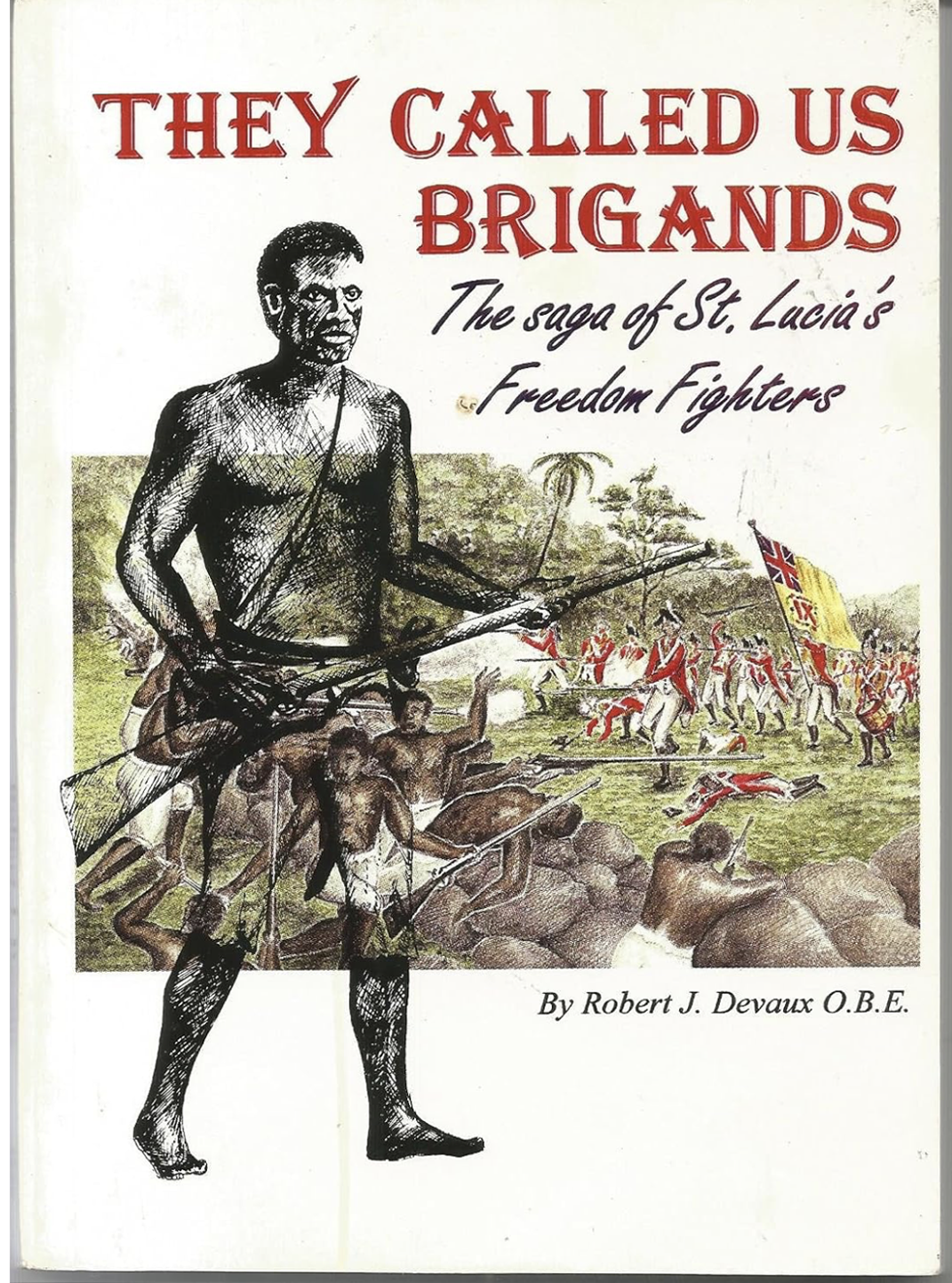
by those who had lived these histories. And the deeper truth? Much of our history had been deliberately destroyed.
The MENTORS WHO SAW WHAT I COULDN'T
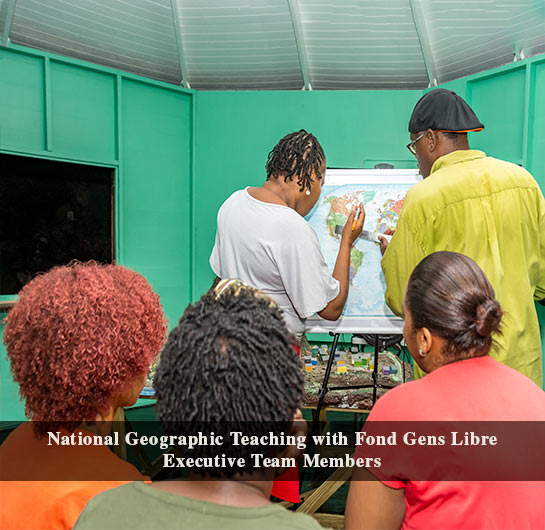
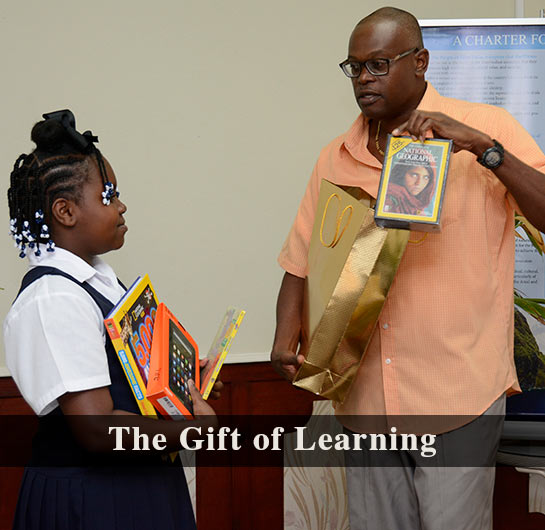
In 2015, I met Sandra Turner, a National Geographic Certified Educator visiting Saint Lucia to deliver school supplies to rural classrooms. We connected over a shared passion for education and cultural preservation.
Sandra looked at the work I was doing with Fond Gens Libre and said something that shifted my trajectory: "You should become a National Geographic Certified Educator. Your work deserves that level of rigour and credibility."
I completed the certification in 2018. For my capstone project, I returned to Fond Gens Libre and taught the community about the Underground Railroad in the United States compared to their own ancestors' resistance in the Caribbean.
A hiking guide asked a question that would become central to everything: "If we learn about the hardships of slavery, will we develop resentment toward the white tourists we guide up the mountain?"
After deep discussion, the community reached a profound consensus: Modern visitors cannot be held responsible for the actions of colonisers from centuries ago. They chose healing over resentment. Knowledge over ignorance.
I recommended that they begin interviewing their elders and recording their oral histories before those stories disappeared forever.
That's when I understood: I wasn't just helping a hiking operation. I was participating in the reclamation of stolen identity.
THE VALIDATION I DIDN'T KNOW I NEEDED
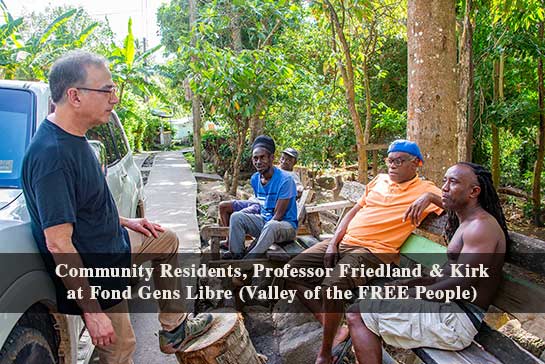
In 2023, I was introduced to Professor Paul Friedland - Cornell University's Professor of French Revolutionary History.
Dr. Jolien Harmsen, co-author of A History of St. Lucia, connected us with this recommendation: "You know who would be really good to hook up with is Kirk Elliott. He's a photographer and active member of the Saint Lucia National Trust, working on projects at Fond Gens Libre. He has a deep interest in the history of the period of the French Revolution in St Lucia."
Professor Friedland and I spent a weekend together
exploring Fond Gens Libre, interviewing community members, and piecing together fragments of history that existed in neither his academic archives nor the community's living memory alone.
He shared something that hit me like thunder: The British colonisers deliberately called the freedom fighters "brigands"instead of "revolutionaries" because it was a legal strategy. Calling them "brigands" (essentially "terrorists") gave the British the right to shoot them on sight without trial - no political legitimacy, no human rights, no recognition that these people had a vision worth respecting.
I had already been calling them freedom fighters instead of "runaway slaves" or "brigands." I'd intuited that these were coloniser terms designed to diminish. But Paul's explanation revealed how language itself had been weaponised to erase not just stories, but the very humanity of those who resisted.
"YOU'VE GOT ONE HALF, I'VE GOT THE OTHER HALF"
Everywhere we went in Saint Lucia, Professor Friedland observed the same thing: People expressing regret that their stories had been taken away. That they hadn't been able to pass them down.
"It's the legacy of slavery and colonisation," he told me. "It's more than just exploitation - it’s kind of destroying people as a community."
In Fond Gens Libre, community members begged us: "Come back and tell us more. We want the stories."
That's when Paul said something I'll never forget: "You've got one half and I've got the other half, and we're
finding a way in the middle to see how the pieces fit together."
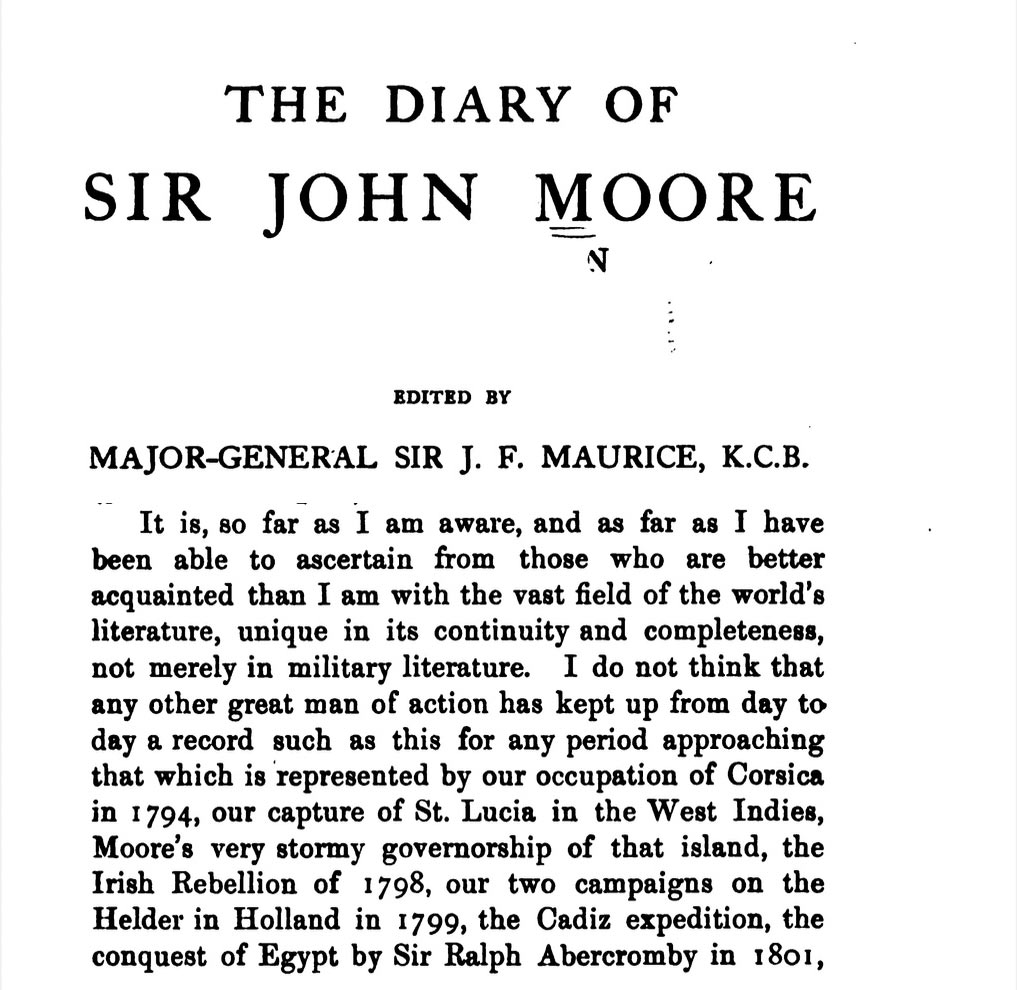
He has the academic research - French Revolutionary documents, British colonial records, military diaries that chronicle what happened but erase why it mattered.
I have the community relationships - elders’ oral histories, lived experience as a Saint Lucian, years of trust-building with descendants of the people those documents tried to erase.
Together, we're reconstructing what was stolen.
The people who resisted here weren't just escaping slavery. They were Republicans - believers in the French Revolutionary ideal that all people, regardless of race, deserved universal human rights. As they faced execution, they would shout "Vive La République!” - still believing in that vision even as it was being taken from them.
These weren't victims. They were visionaries.
And their descendants deserve to know that.
WHY IN THE SHADOW OF THE GODS EXISTS
In the Shadow of the Gods is the culmination of this ten-year journey.
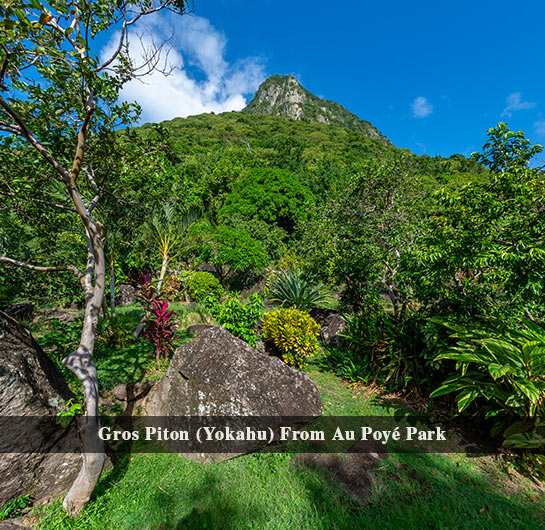
It's where Cornell-validated research meets community-preserved memory. Where geological truth (my Bachelor of Science degrees in Geology and Chemistry) meets spiritual significance (the Kalinago worship of Gros Piton as Yokahu, deity of volcanic mountains. Where National Geographic-level storytelling meets the voices of elders who are the last living links to histories that were never written down.
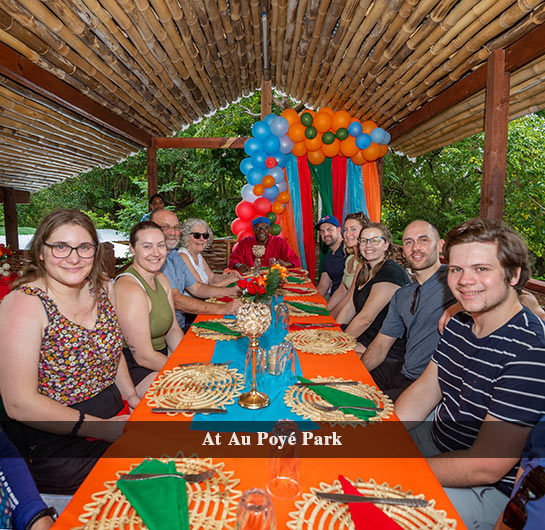
When you stand with me at Au Poye Park in Fond Gens Libre - literally in the shadow of Gros Piton, where freedom fighters once stood - you’re not receiving tourist mythology.
You're receiving stories that:
- Professor Paul Friedland helped me validate through French Revolutionary archives
l- Community elders entrusted me to share after years of partnership
- The Piton Management Area invited me to preserve when they recognised my commitment to excellence
- National Geographic trained me to tell with rigour, respect, and accuracy
You're standing on land where people chose freedom over captivity, healing over resentment, and vision over victimhood.
And you're invited to ask yourself the same questions they asked:
What story have I been told about myself that diminishes who I actually am?
What history needs reframing - from "runaway" to "freedom fighter," from limitation to liberation?
What's my Vive La République moment - the vision I believe in even when the world says it's impossible?
This is why your "Million Dollar Moment" at Au Poye Park isn't generic spiritual tourism. It's standing where documented transformation has already occurred - for me, for Professor Friedland, for the Fond Gens Libre community - and opening to what's waiting for you.
THIS WORK CONTINUES
The missing pieces Professor Friedland identified - 19th and 20th century anthropologists who might have recorded oral histories in small-run local publications - are still waiting in Saint Lucia's archives. The elder interviews allow stories to be preserved before they're lost.
In the Shadow of the Gods isn't a finished project. It's an ongoing mission.
And when you join me for a Wednesday at Fond Gens Libre and Au Poyé Park, you're not just observing this
work - you’re participating in it.
Your presence validates that these stories matter.
Your investment supports the "Giving Forward" initiative that supports rural education and cultural preservation.
Your breakthrough becomes part of a larger story of reclamation - not just yours, but the community's too.
THE INVITATION
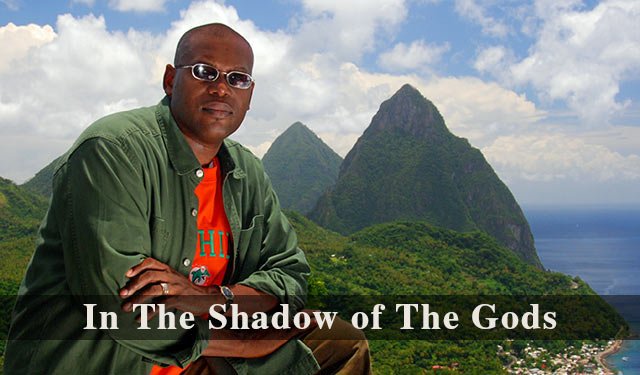
If you've read about In the Shadow of the Gods and felt pulled toward something you can't quite name - if reconstructing stolen history and standing where freedom fighters once stood resonates with something in you - then we should talk.
Not because I need to convince you. But because
you might be ready for this threshold, and I can help you discern whether it's yours to cross.
I'm not a tour guide. I'm a bridge:
- Between Cornell historians and community elders.
- Between geological fact and spiritual significance.
- Between past erasure and present reclamation.
- Between your life as it's been and your life as it could be.
Professor Friedland said it: "You've got one half and I've got the other half."
The question is: What half are you carrying that needs to be joined with something larger?
What story needs reconstructing in your own life?
And are you ready to stand in the shadow of the gods to find out?
SCHEDULE YOUR DISCOVERY CALL
This isn't a sales conversation. It's alignment.
A chance for you to feel my energy, ask your questions, and explore whether In the Shadow of the Gods is the threshold you've been sensing but haven't yet named.
I'll be honest with you: Not everyone is ready. And that's perfect. This experience doesn't work when people are merely curious - it works when they're called.
But if you're reading this and recognising yourself in the journey - if you've spent your life seeking truth beyond surface narratives, if you value rigorous research and authentic community partnership, if you're ready to participate in something larger than personal transformation - then your Wednesday might be waiting.
CONTINUE EXPLORING
Want to understand more about what happens during the experience?
Curious about how your investment supports Saint Lucian communities?
Ready to see what guests discover at Au Poye Park?
"Until the lions have their own historians, the hunt will always glorify the hunter."
For ten years, I've been helping the lions tell their own story.
Not as victims who fled.
But as freedom fighters who refused.
As Republicans who believed in universal human rights even as they were executed for that belief.
As visionaries whose descendants are reclaiming the truth that was stolen from them.
Your role isn't to save them. It's to witness. To learn. And maybe - just maybe - to find your own story reflected in theirs.
Welcome to the work.
Bridge Between Worlds
Contact Us


In The Shadow of The Gods: Where The Island Reveals Itself To Those Ready To Truly See
© 2026 In The Shadow of The Gods ... All Rights Reserved
In The Shadow of The Gods: Where The Island Reveals Itself To Those Ready To Truly See
© 2026 ... In The Shadow of The Gods